HOW WE THINK
Where am I standing?
A colleague can look impossible in one moment and entirely different in another. A decision can feel like a dead end, then open after a conversation, a night’s sleep or a shift in your own state.
Nothing outside necessarily changed. But the world you were in, and how you were participating in it, did.
We usually move on without noticing what this reveals. What changed between who we were in that moment and the world we were experiencing?
Most of our lives are organised around what is happening out there. One of the most profound shifts is learning to notice where we are standing in relation to it.
Every experience contains that relationship:
SELF
Who am I from here?
WORLD
What kind of world is this from here?
PARTICIPATION
How do I meet this world from here?
Most of the time, we don’t notice that place. We simply experience:
This is me.
This is what they are like.
This is what is happening.
ORIENTATION
Orientation is the place from which we experience ourselves, the world, and our participation in it.
Before asking what to do, notice what is shaping the world you are responding to.
Transformation is not getting somewhere.
Much of what we call development is additive: more knowledge, skills, strategies and more sophisticated perspectives.
All useful. But they can still be used from the same orientation.
This turns the usual direction of development around.
Transformation begins when the identity and worldview shaping our experience come into awareness, and what is limiting us can be recognised and unwound.
A different orientation changes who we are from here, the world we find ourselves in, and how we participate.
There is no permanently transformed state to reach.
There isn’t one.
We’re human, after all.
Transformation is not a journey towards wholeness.
Wholeness is already here.
Wholeness does not come and go. What changes is our availability to it.
Under pressure, our perspective narrows.
We see less of ourselves, less of others and less of the whole already here.
So how do we recognise when our perspective has narrowed?
We start with experience.
The issue is not only the issue.
Your experience is data.
What is happening matters. But your experience also tells you something about where you are standing.
If a person suddenly seems difficult, a decision feels impossible, or the need to control becomes overwhelming, the question is not only:
What is happening out there?
It is also:
What is my experience telling me about me, the world I am inhabiting, and how I am meeting it?
Learning to read our experience as data makes this practical in real time:
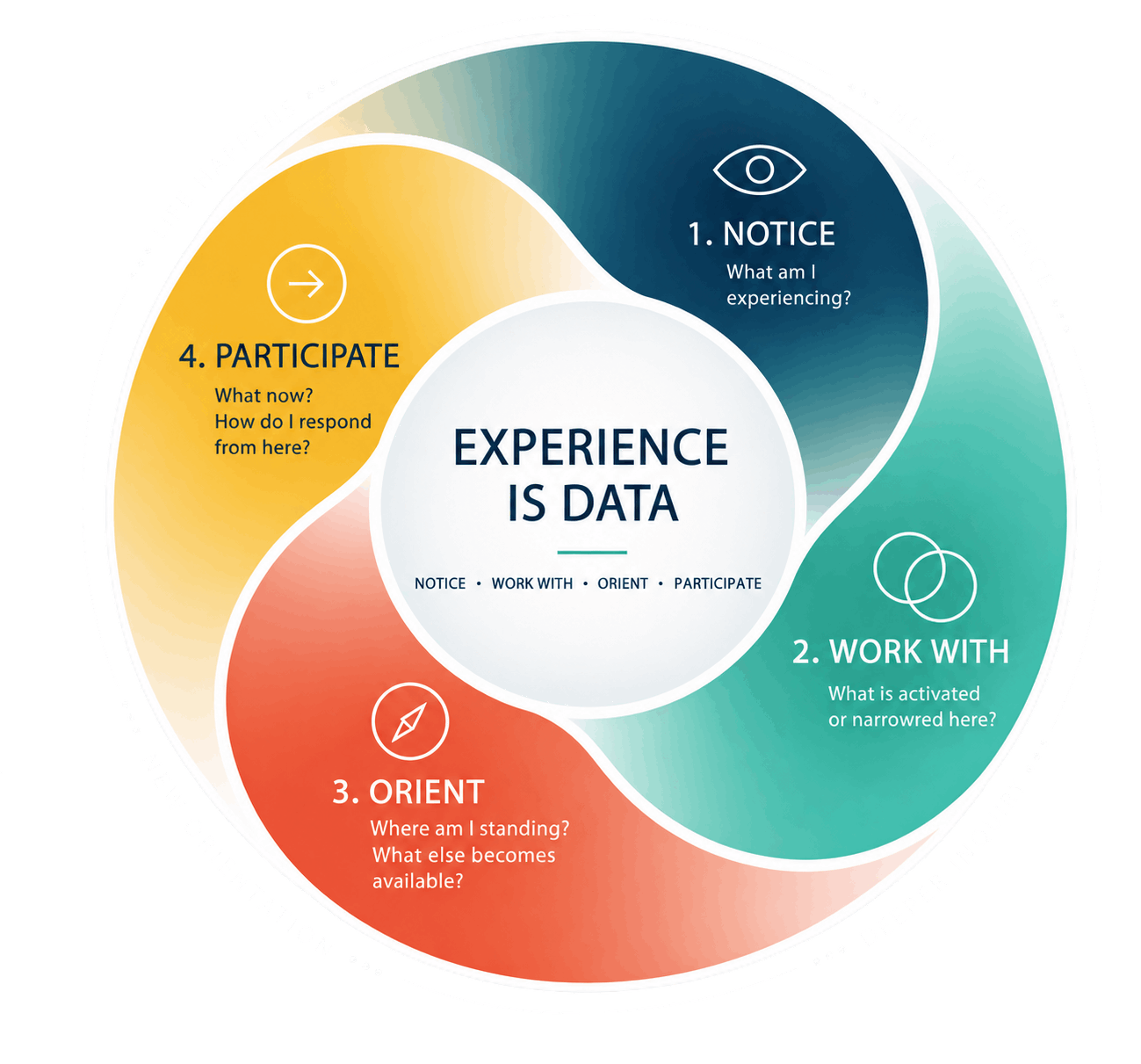
NOTICE
What am I experiencing?
Notice more than the story: body, attention, mood, assumptions and relationships.
WORK WITH
What is activated or narrowed here?
Something may need to be regulated, questioned, examined or brought into relationship.
ORIENT
Where am I standing now?
Who am I from here?
What kind of world is this from here?
PARTICIPATE
How do I meet this world from here?
Notice what happens next. Your participation shapes the next experience.
The Eight Ways
Experience is data.
The Eight Ways help us know how to read it.
The Eight Ways are eight places to look from within one experience. They help you notice what is shaping how you meet it and work with what limits participation.
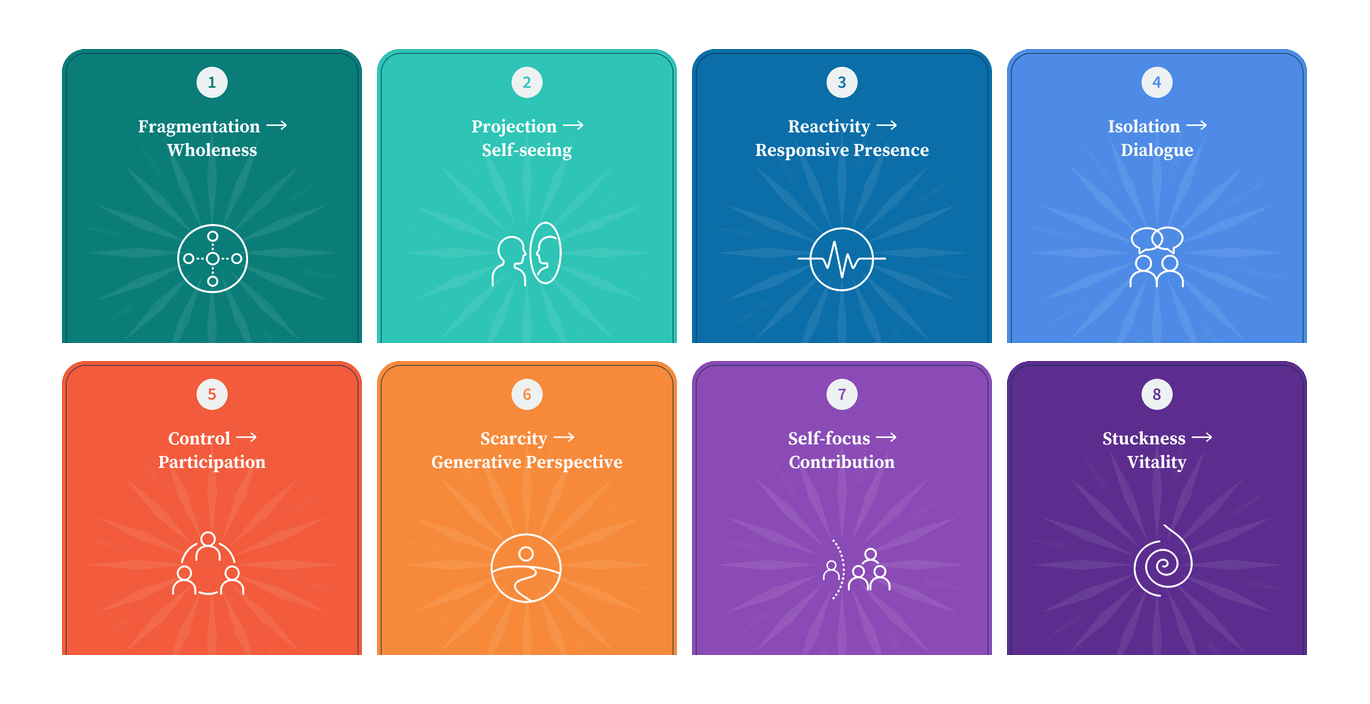
What might need my attention here?
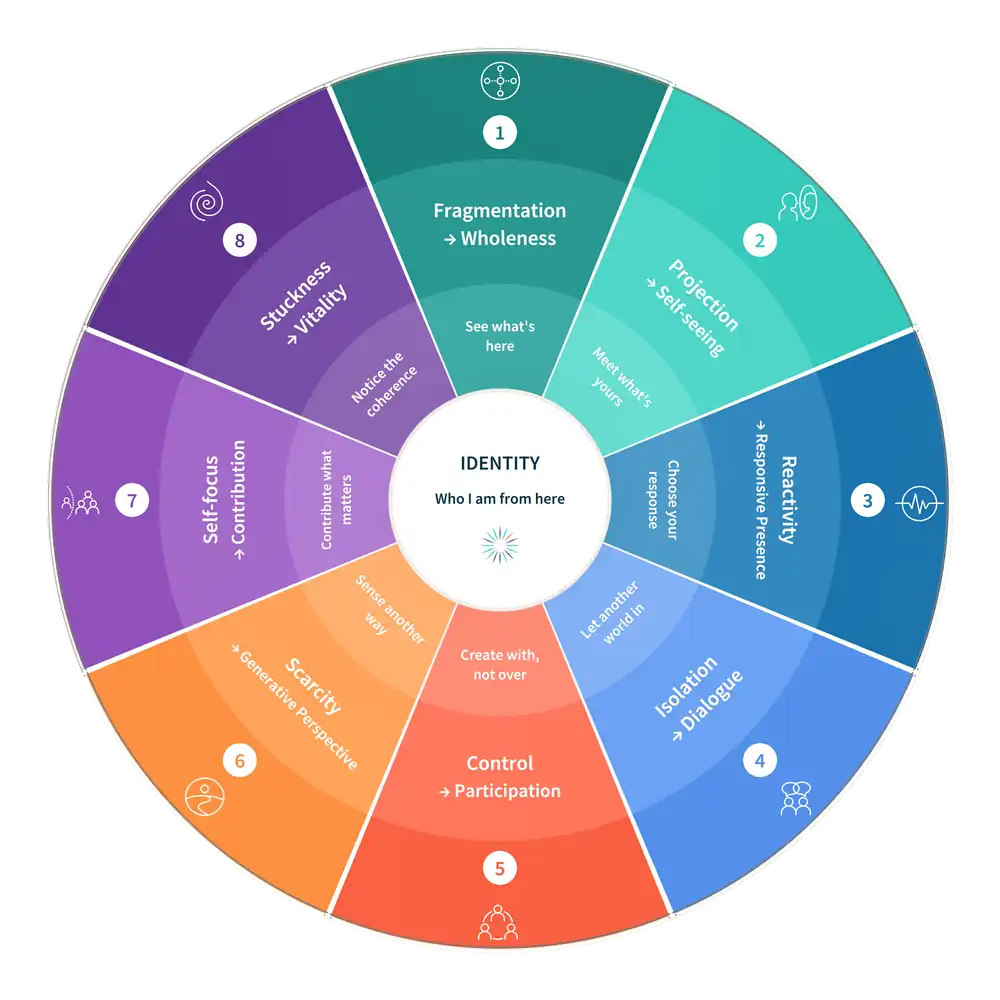
Eight Ways. One experience.
The Compass
The Compass brings those places to look from into a live situation. It is a tool for enquiry, not a diagnostic, score or map of where you should be.
Noticing is only the beginning. Different patterns call for different approaches. As we recognise what is limiting us and begin to unwind it, orientation can change.
Orientation Intelligence
Over time, we develop the capacity to notice where we are standing, read our experience as data, and recognise what is limiting us.
This is Orientation Intelligence.
It gives us greater clarity and choice in how we lead.
Transformation becomes possible in real time, not because we stop reacting, but because we know how to navigate when we do.
Contribution matters more. Control loosens. Relationships strengthen.
Whole Intelligence
Human beings are capable of remarkable clarity, creativity, courage and connection.
Under pressure, that range narrows.
As we become less defended, we think more broadly, connect with others, see ourselves more clearly, participate rather than control, and recover creativity and vitality.
This is what becomes possible as we become more available to the whole already here.
The same starting point also changes how we understand power.
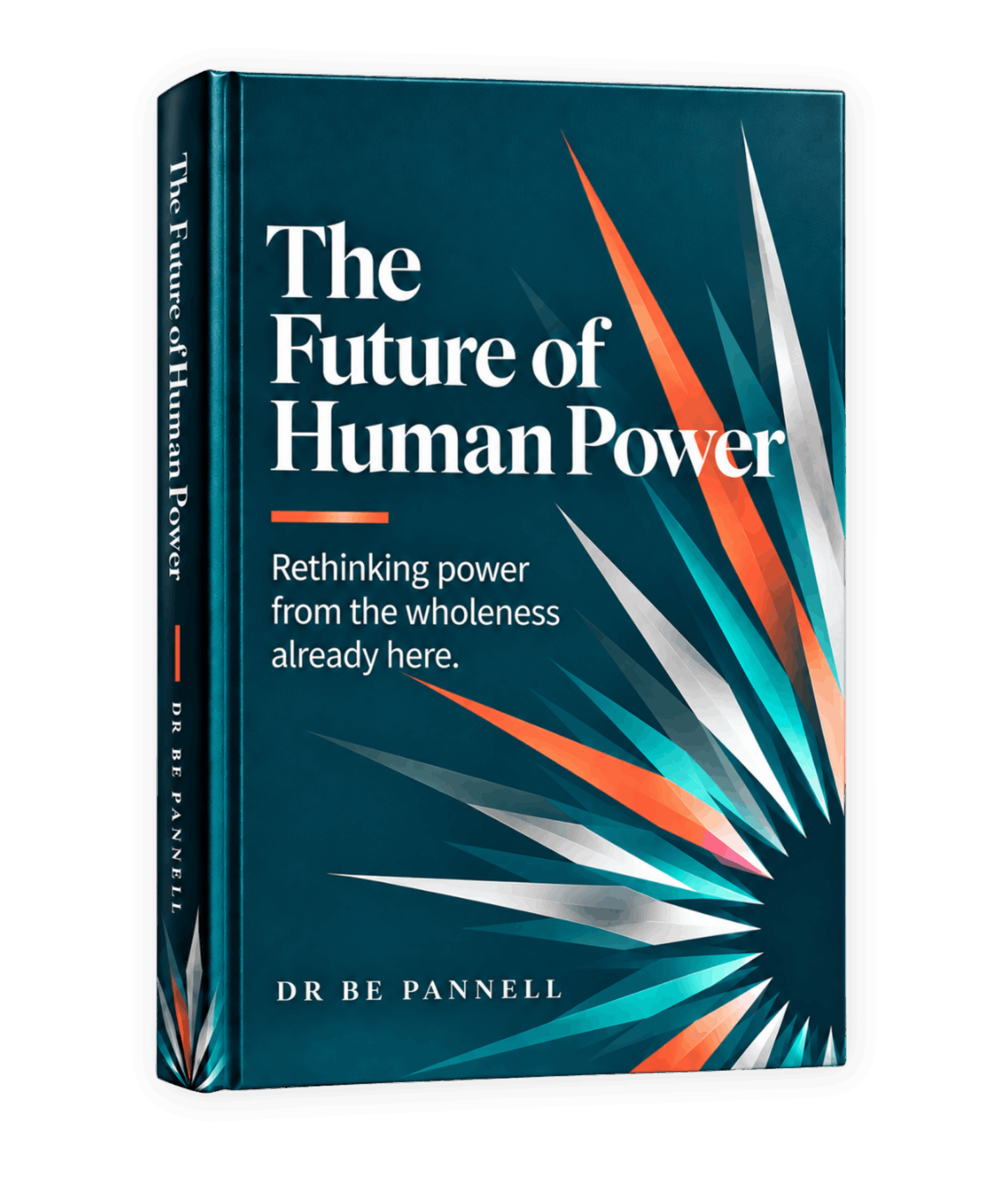
FORTHCOMING BOOK
The Future of Human Power
Rethinking power from the wholeness already here.
If we are not separate from the world we seek to influence, what does power become?
How we participate shapes what happens next.
Where will you begin?
Begin with the guide.
A practical guide for seeing the bigger picture under pressure.